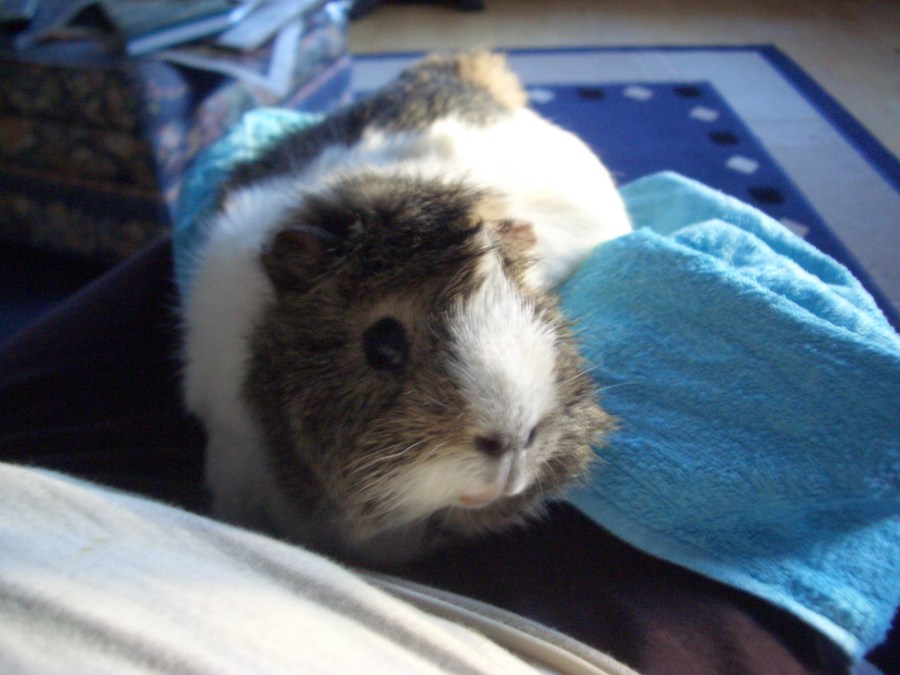
This is the 1,000th post on George’s Guinea Pig World! Thank you to everyone who has taken part.
Hello, I’m Pippin, and I’m a guinea pig. Today I’m going to talk about Vitamins, and Ventilation.
We’re helping out our Mummy, Jemima Pett, who is doing the A2Z this year by putting together all the posts we’ve done here on George’s Guinea Pig World, to make a book on Guinea Pig Care from A to Z. You can see her posts here: jemimapett.com/blog/. We’re filling in the gaps this month.

Vitamins
Providing you are following the guidelines on feeding us, you don’t need to worry about vitamins. You almost certainly don’t need to get them from the pet shop and add them to our water. That’s just a waste of money, and could be damaging.
Just like humans, we need to take in vitamin C to keep us healthy. That’s available in fresh fruit (including tomato) and in most leafy green vegetables, enough for us anyway, even if it isn’t enough for you. Eat more lettuce! On second thoughts leave your lettuce for us! Some pigs like citrus, which is another source, but make sure the pith (white stuff) is removed if you give it to us. Red pepper (bell pepper) is also very high in Vitamin C. Really, though don’t overdo it. Most pellet food has added vitamin C, although it does fade with time, so if you buy short-dated bags, make sure you eat them up quickly. It won’t harm your pigs if it’s out of date, but the vitamin C content won’t be there. Not a problem with lots of fresh veg.
You can overdo vitamin C. I don’t know of it happening to a guinea pig, but it gets reported in human newspapers every now and then.
The other vitamins will also come naturally in your food, unless you live in a very strange area.
And a word about water quality. Even if you live in a ‘hard water’ area the tap water is probably better for us than expensive bottled water. All those minerals in the spring water can be bad for us if it’s the only water we get. Puts the kidneys to work too hard.
And don’t forget Vitamin D. Like you, we get it from daylight, which is why the Indoor Guinea Pigs range of food from Burgess Excel has added vitamin D. I must admit I wasn’t that keen on it, but Ronnie and Reggie liked it a lot. I stuck with the ordinary Excel pellets, and looked forward to our next grass time. There’s more benefit to being outdoors than just grass!
Ventilation
Whether indoors or out, we need fresh air. You want to keep the room warm enough for us, but fresh air is essential for keeping us healthy. Nobody wants to live in a fug. And if someone walks into your house and says ‘I can tell you have guinea pigs’ or ‘your guinea pigs smell,’ you need to review both your ventilation strategy and the frequency and depth of your cleaning of our runs and cages.
Somebody started a nasty rumour that guinea pigs, especially boars, smell. We might do sometimes, but it usually means there’s something wrong with our diet, our health, or you haven’t cleaned us out thoroughly. AND there’s not enough ventilation.
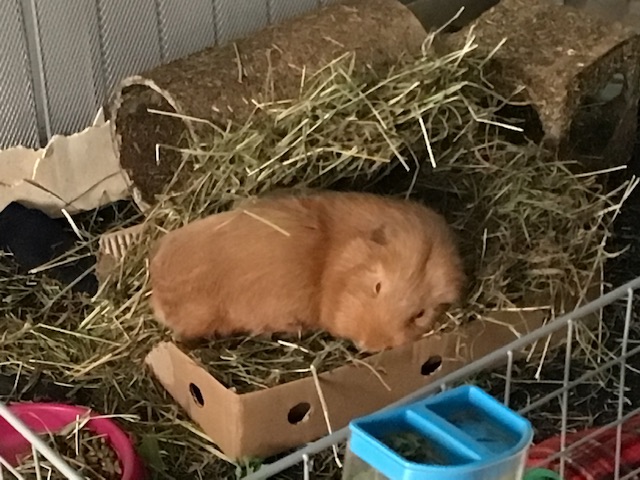
Ever since Mummy watched John Chitty’s lecture on keeping guinea pigs she’s given us much more ventilation. It’s easy because she’s home most of the time, but she always has the ventilator above the window open, and usually has the door open on a catch, too. So a little air comes through at all times. It doesn’t cause a draught, just air circulation. And the room is generally a nice temperature for us, not too warm. We tend to like it a little cooler than you humans do. It’s the fur coats, you know. We don’t take them off, but we can always hide in the hay or in snuggle tunnels if we want to be warmer. Actually, we just do that for fun most of the time.

So that’s it for V, tomorrow we’re getting towards the end of the alphabet with W, only four more days to go!
See you then
Love
Pippin xxx


Congrats to you and Mummy on the thousandth post! I remember with love all the bloggers who’ve gone before. Julius and Percy send congratulations.
I haven’t kept up with posts this week. Bad Auntie! I’ll try to go back and read them soon.
XXOO
LikeLiked by 1 person