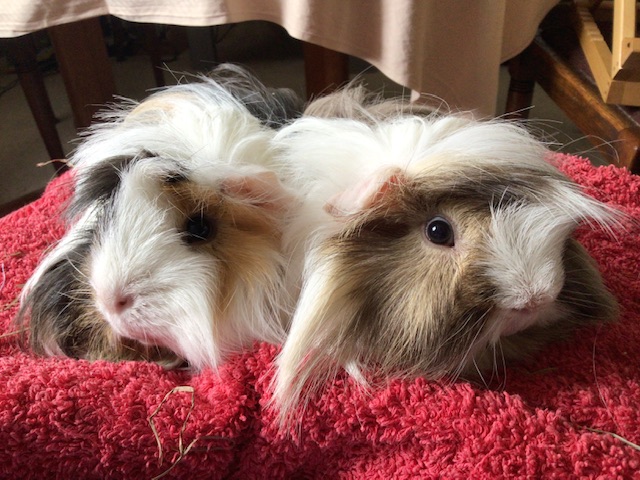
Hello, I’m Pippin, and I’m a guinea pig. Today I’m going to discuss Recycling and Waste, although I did talk about composting or otherwise disposing of poo in the post for P.
We’re helping out our Mummy, Jemima Pett, who is doing the A2Z this year by putting together all the posts we’ve done here on George’s Guinea Pig World, to make a book on Guinea Pig Care from A to Z. You can see her posts here: jemimapett.com/blog/. We’re filling in the gaps this month.

Recycling Options
What and how you recycle starts right at the beginning, with deciding how you are going to keep your pigs. I don’t think it makes much difference whether you keep your pigs inside or out, but you need to think about recycling in three stages:
- Reduce
- Re-Use, and then
- Recycle
Reducing use of our housing and disposables
Starting at the beginning, consider getting pre-used housing, rather than buying new. You have to be careful of buying cages, they need to be being enough, and not damaged. Mummy has two 140 cm length cages, the ones Fred, George, Victor and Hugo lived in from the start. She also has a 100cm one, which she got as an emergency cage in case of illness, and a 120 one, when she needed one for a lone pig, and only had room for a 120. She thinks she might reuse the 140s at some stage if she needs to raise the level of our living quarters, but I think if someone wanted to buy them from her, or make a donation to the rescue for them, she would let them go. The 120 was where I lived for a while, when we all fell out and I needed my own space. It was quite nice, but I couldn’t see through the side. That’s nice if you like privacy, but I also wanted to see my companions (I wouldn’t call them mates at that time). I could stand up and look out, of course.
Many people get what used to be called C&C set-ups. This is what we have now, with the base made of something called correx, and the sides made from grids that are sold to make cubes for storage, but make excellent runs. George designed one for Mummy, pointing out that if she made it a double layer, she could store things underneath. She’s done that evermore. You can buy these things, especially from a firm called Kavee, who also make good absorbent linings for them.
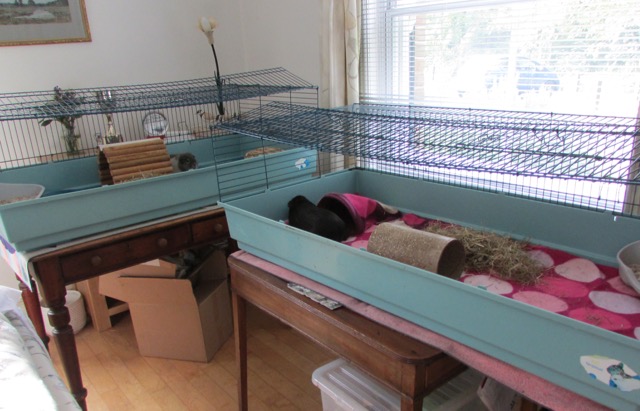
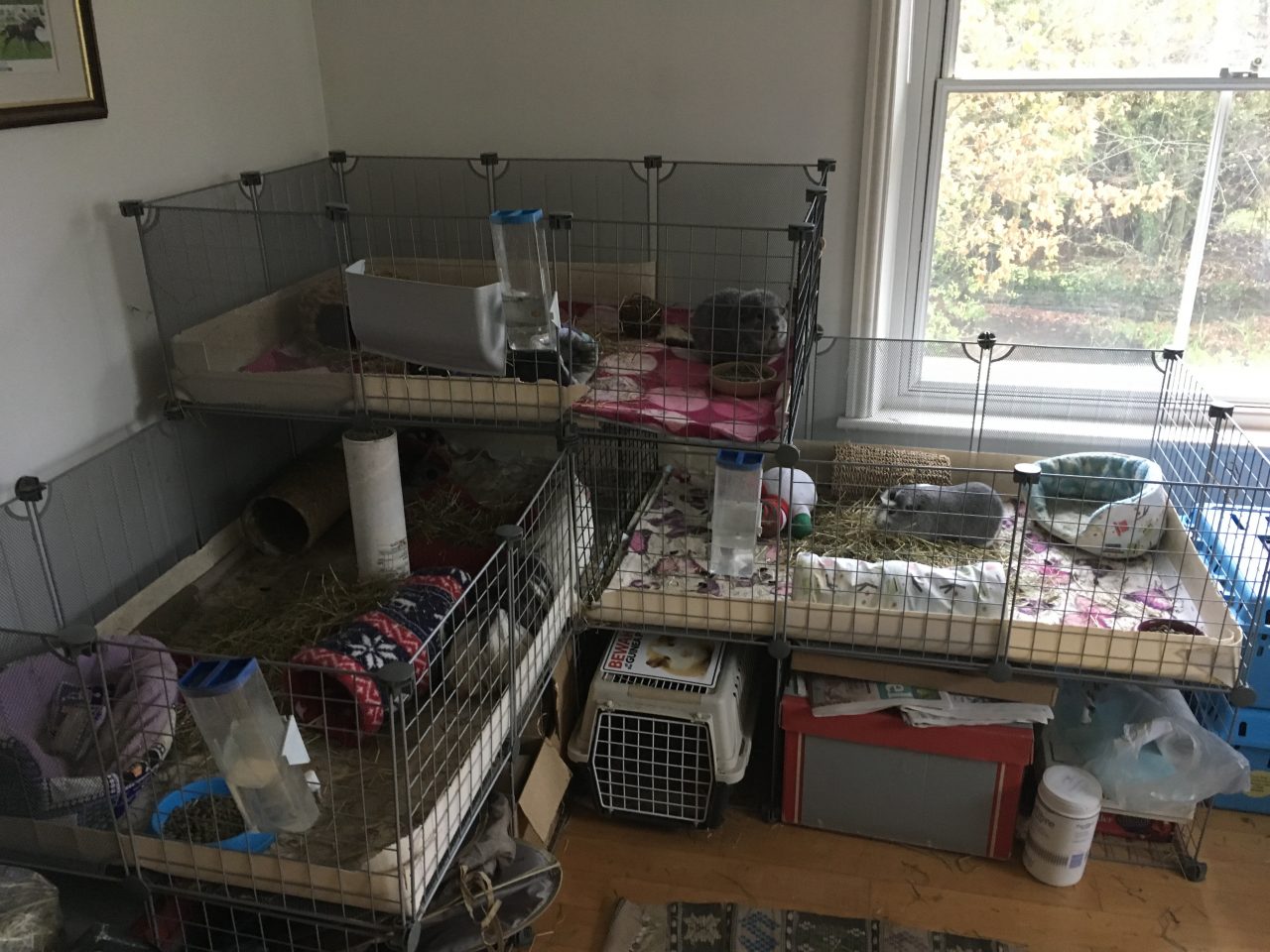
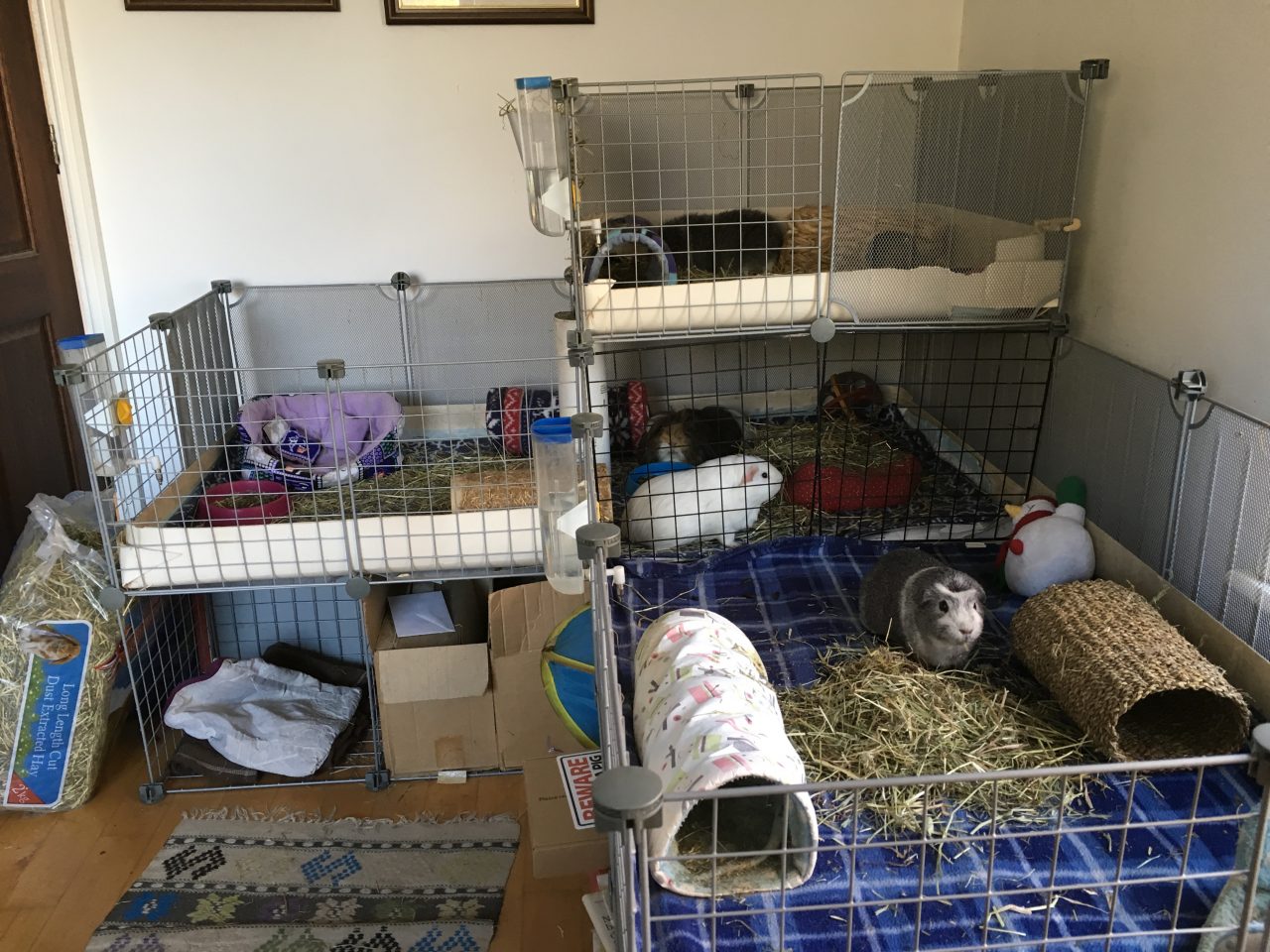
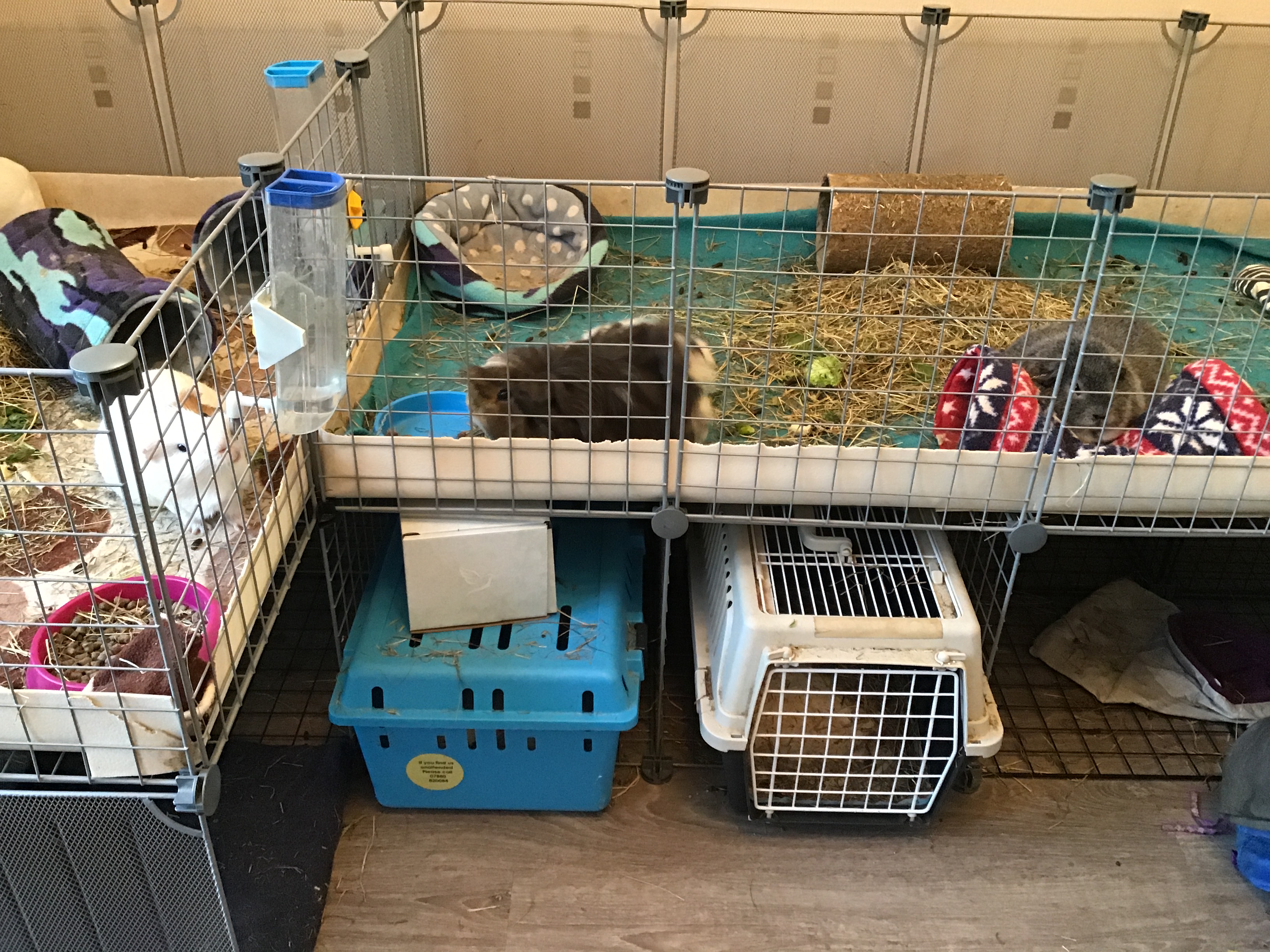

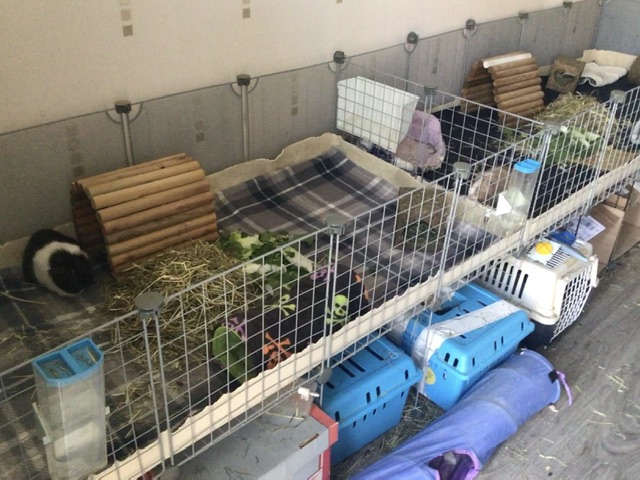
And then there are hutches. Getting a big enough hutch is hard work. Remember two boars need at least a 140×80 cm space. And more is better, since boars are less likely to fall out, the more space they have. Bachelor pads at 120 are okay, but only just.
But with all types of set-up, you can get second-hand units, which saves them being thrown out. Mummy says to check the freecycle notice boards and guinea pig websites where people chat. But you can also ask your local rescue if they have anything suitable, or know of someone with kit to spare. Mummy has some spare grid panels, but she doesnt want to give them away yet, in case we need to reconfigure our set-up yet again.
But don’t skimp on size. Get the largest spaces you can fit in your house, and if you can devote a whole room to a run, that is wonderful!
And even though it might seem wasteful, don’t skimp on the amount of bedding or hay we have. Both are essential for our comfort and health.
Re-Use
Obviously you can’t re-use loose bedding like hay litter or shavings, or aubiose/bamboo, or megazorb. But you can put reused paper underneath it, from wherever you can get it. Newspaper used to be popular but now you have to get other paper sources, like the paper that comes in packaging.
If you use a lot of white paper, you can shred it, and use that for our bedding, or for a litter tray if you have pigs that will use it. Locksley used a litter tray for a long time, but then he stopped, for some reason, so Mummy took it out again.
You can reuse bedding like fleeces for years. You need to get ones that let the wee through, but you don’t really know how good they are until you’ve washed them a few times. Eventually fleeces get a little less fleecy, but they are still good to use. Mummy uses some of them folded in half to make them softer. They can also get stiff with wee salts. Soak the patches in vinegar to help shift it, and then wash. Mummy puts our fleeces inside a big bag called a duvet cover when she puts them in the washing machine. She says it helps to stop any bits of hay and hair messing with the machine’s insides. She shakes them out and put them in the garden to blow a bit when she takes them off our beds, then a day later she puts them in the wash.
Underneath the fleeces are large reusable wee pads, sold as incontinence pads. Mummy has about ten of them, although we only use four at a time. They go in the washing machine on a low temperature (although they can go higher if you prefer). Mummy brushes any hay off them before putting them in. They dry quite quickly, but not overnight unless it is very warm.
Mummy also has some smaller disposable pads for patches we get especially wet. They need to go in the waste bin when they are wet or dirty. Use the ones for humans, not for dogs. Puppy pads have been treated with a scent to help encourage puppies to use them. The scent isnt what we want to smell.
We also re-use all sorts of toys and snuggles, and bowls and things that the pigs before us had new. When they are too worn to use she disposes of them, and gets new ones. Sometimes she turns old fleeces into snuggles, she says, but I don’t think she does that any more. Maybe other people do.
Recycle
Mummy says that things aren’t really recycled until they have been made into things someone wants to use. So making old fleeces into snuggles is part of that.
As far as possible keep all your plastic bags together, but remove any paper labels, so they can go to the plastics recycling companies. Our vet collects plastics for recycling. They go and get made into other useful things.
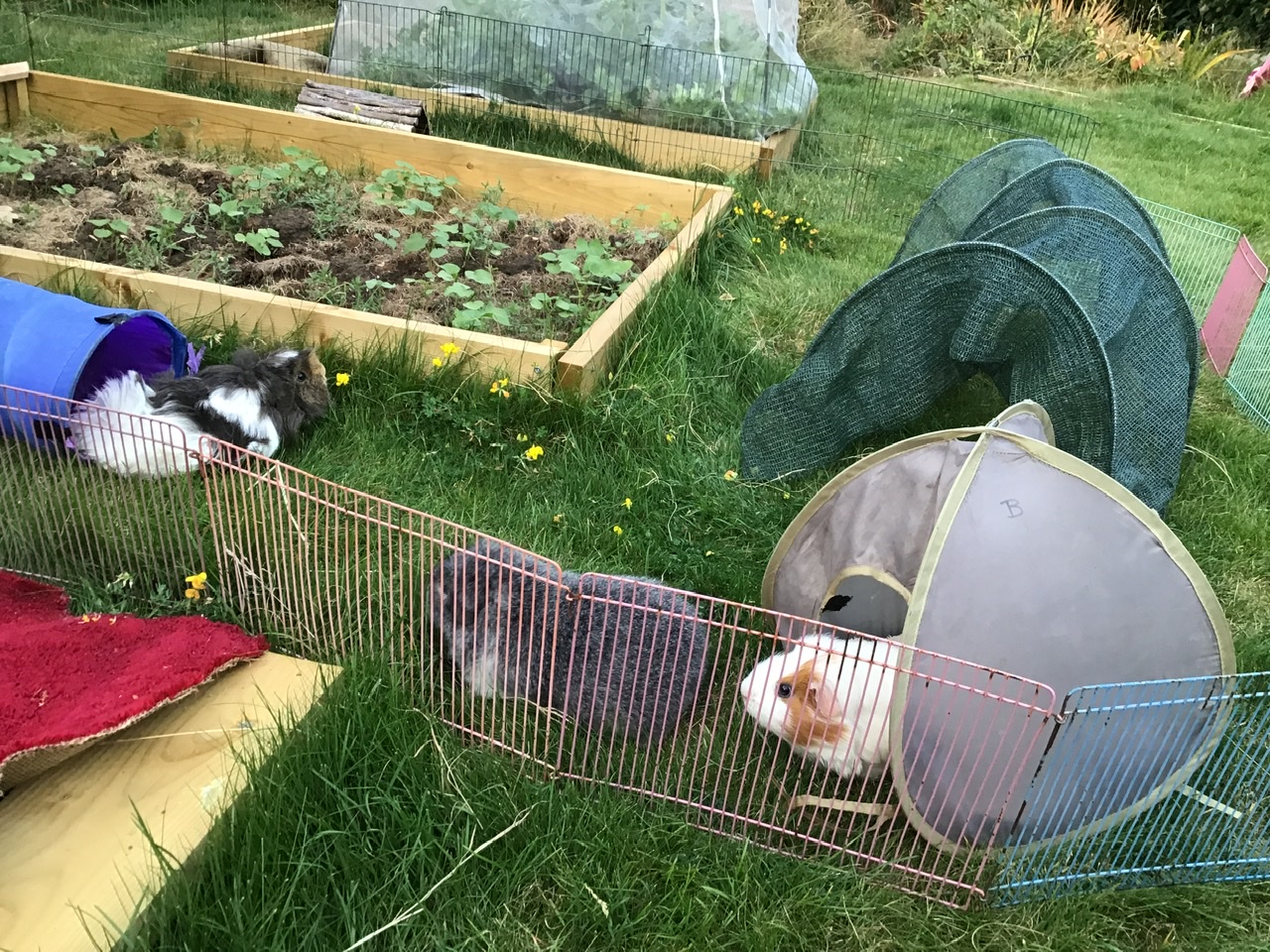
And poo gets recycled into compost if you can possibly do it, even in a very small space like a balcony. But the compost needs somewhere to go, too, so you can put it in flowerpots or troughs, and grow things like herbs, lettuces and tomatoes in it. We have a garden, so the compost goes into the vegetable patches and flowerbeds. Then we grow things like cucumber, rocket, Swiss chard, and lettuce, and celeriac (Mummy says its easier than celery). Beetroot is easy to grow, but we can only have very young leaves. And in the winter we grow kale. Mummy would grow cabbage, but we don’t like it. She mostly grows things we like. And carrots of course!
Mmmm carrots fresh from the garden with fresh carrot tops – Yummy!
Waste
Sometimes you just have to accept that things go into the waste bin. Nobody is reycling used syringes. Or pads that were wee’d on. They should be wrapped up and put in the waste bin. And plastic you can’t recycle goes to waste as well, although Mummy makes it work by putting the pads in them. And if you can’t make compost, our bedding waste will have to go in the waste bin, unless you know someone with an allotment who wants it.
But try to find a better place for everything that otherwise goes to waste.
I can’t think of anything else. We try to do our bit for the planet, but it’s up to you, really.
Tomorrow is S. That’s an interesting letter!
love
Pippin xxx


A wonderful discussion, Pippin. I also like carrots, but I do love cabbage, too. Do you not like the taste? I would think it would be good for you!
LikeLiked by 1 person
I liked having the poo for the compost heap! Or, right into the garden, since it’s cold.
LikeLiked by 1 person
Snuggles! Love the word as a physical comment, love the idea of making them from recycled fleece.
Excellent post!
Lori
LikeLiked by 1 person
We liked using fleece, but we got a “friendly reminder” from building management that the hay that was stuck to the fleece was clogging up the washing machines, so we had to go back to the pelleted type of betting. Ah well …
XXOO
LikeLike
Oops. I meant bedding.
LikeLike