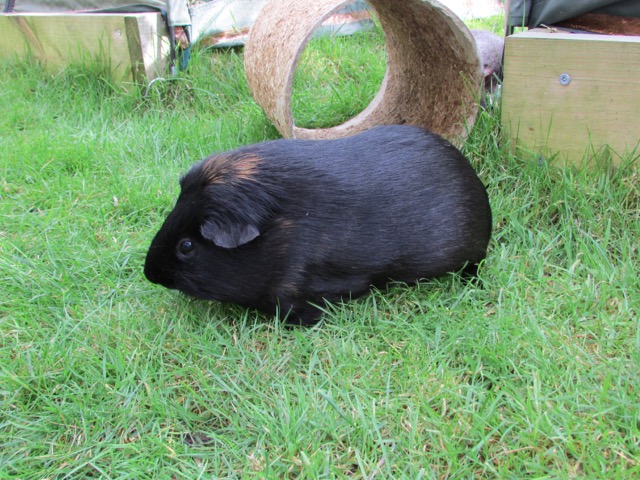
Hello, I’m Pippin, and I’m a guinea pig. Today I’m going to talk about Poo, and what to do with it. Also, after I talked about things never to do in letter N, I’m talking about Poisonous plants, and Picking us up.
We’re helping out our Mummy, Jemima Pett, who is doing the A2Z this year by putting together all the posts we’ve done here on George’s Guinea Pig World, to make a book on Guinea Pig Care from A to Z. You can see her posts here: jemimapett.com/blog/. We’re filling in the gaps this month.

Poo
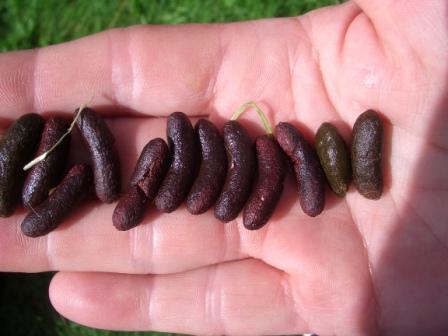
We eat a lot of hay. And that is magically transformed into poo, which comes as neatly wrapped packages from our rear ends. Some of it is a little special, slightly soft, and we eat that ourselves because it has extra goodness. The term for that is copraphagism, and we are copraphagic animals.
Althoguh you would want to wash you hands thoroughly afterwards, it’s quite okay to pick up poops from a healthy pig. If you find them soft or (horrors) runny — take your pig to the vet straightaway. Diarrhoea can kill. And beetroot can turn brown poops purple, sdon’t worry about that at all.
Poo disposal
Together with waste hay, we turn out about a bucket of poo waste from three pigs every two-three days. It makes excellent stuff for compost heaps or bins. But we live on fleece, so there’s no other bedding waste. Most bedding (shredded paper, bamboo, woodshavings (yuk), megazorb) is compostable if there’s not too much of it. If you add a little a day, rather than a bucket every few days, you might be able to dispose of it via a wormery. If you don’t know about wormeries, see this information from Wiggly Wigglers.
Unfortunately most commercial composting facilities – green waste facilities in local government talk, don’t accept animal waste in any form. I think it’s mainly because of policing it. Dog and cat poo definitely cannot go in commercial compost, they have all sorts for things in them to contaminate the final product, which goes on your flowers and vegetable beds. Only vegetarian poo would be acceptable. And in a commercial world, you also have to make sure it does have any medicines in it that would damage growing plants. So when Biggles was having thyroid medicine, Mummy cleared his waste separately into a plastic bag and disposed of it in the waste bin. The rest (ours) went in her compost bins as usual.
Domestic waste bins (non-recycling bins). These are where people without compost heaps would probably have to put their poo waste. It needs to go in a sealed bag. one tied at the neck or sealed with tape is fine. If you put one or two bags in each time the bin is emptied you’ll probably be fine. Some councils object to more. If in doubt, contact you region’s waste disposal department.
Poisonous plants (European)
We can eat almost any wild plant a human can, save for things grown from bulbs. So if you like to go foraging, and have a suitable foraging guide, use that, but skip things like wild garlic. Things grown from bulbs are on the ‘probably not’ list and the bulbs are ‘definitely not’. Fred used to like tulip leaves when he found them poking into his run. Mummy discouraged him and took them away, but he seemed to like them the following year, too. Fred had a lot of sense about what to eat and what not to eat. He would give Mummy one of his sternest Looks if she offered him something inappropriate, like hot peppers she thought were sweet peppers.
Here is a list from the Cambridge Cavy Trust of delicious, and poisonous wild plants. The Latin names are to help people in other countries check their local names. Mummy says there is no guarantee that something with the same first part of the Latin name falls in the same category as the one named. If in doubt, don’t feed it. There are more plants that are safe to feed, but easily mixed up with a dangerous one, like cow parsley and all its relatives, which could be mistaken for hemlock. And most brassicas are edible, it’s the cabbage family, but Charlock isn’t. Mummy says she’s never heard of it.
Herb Robert (Geranium robertianum) is also quite nice, and it grows everywhere in our garden. So does Bird’s-foot Trefoil (Lotus corniculatus), red and white Clover (Trifolium repens), and several other tasty things.
| SAFE to Feed | TOXIC – Do Not Feed |
| Dock Rumex crispus | Mayweed Anthemis cotula |
| Shepherds Purse Capsella bursapastoris | Common horsetail Equisetum arvense |
| Chickweed Stellaria media | Charlock Brassica sinapsis |
| Dandelion Taraxacum officinale | Ragwort Senecio jacobaea |
| Vetch Vicia sylvatica | Black Nightshade Solanum nigrum |
| Goose Grass, Cleavers Galium aparine | Deadly Nightshade Atropia belladonna |
| Sow Thistle Sonchus ateraceus | Monkshood Aconitum napellus |
| Groundsel Senecia vulgaris | Hemlock Conium maculatum |
| Yarrow, milfoil Achillea millafolium | Bracken Pteris aquilina |
| Goutweed, ground elder Aegoxilium podagravia | Spurge Euphorbia peplus |
| Avens Geum urbanum | Privet Ligustrum vulgare |
| Knapweed, hardheads Centaurea nigra | Yew Taxus baccata |
| Plantain Plantaginacea | Bastard toadflax Thesium humifusum |
| Tares Vicia hirsuta | White Bryony Bryonia doica |
| Bramble Rubus saxatilis | Bindweed Convolvulus septum |
| Coltsfoot Tussilago farfara |
Picking us up
New piggy parents often ask how they can pick us up without us getting so scared. Well, the trouble is, you are big and scary, and until we get used to you, and discover that being held by you is a good thing, we will run away from you as fast as possible. We are prey animals, after all.
And then we get used to being picked up in a certain way, which makes it hard when you are used to picking up pigs in a different way.
The main things to remember are:
- usher us into a corner, put one hand over us, and slide your other hand under us. That should work.
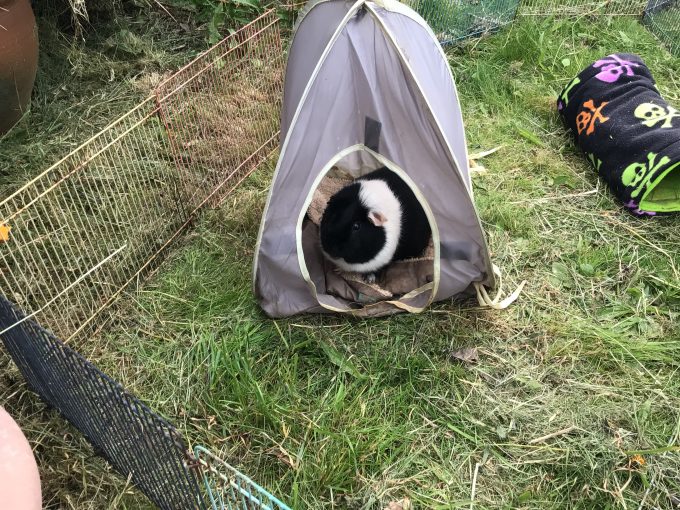
- help us run into a semi-closed space where you can pick us up, especially if you can pick the whole thing up, like a chube or tunnel, or a cuddle cup/snuggle sack, whatever you’d like to call it. Or even a small box. Then bring that to wherever you want us and help us out.
- wait a minute. Especially if your pig seems used to being picked up but changes to wanting to back into a corner beforehand. She or he is having a toilet break before you pick her/him up! We’re very polite to people we like. In fact, when a pig stops peeing or pooing on you at cuddle time, it’s a really good sign!
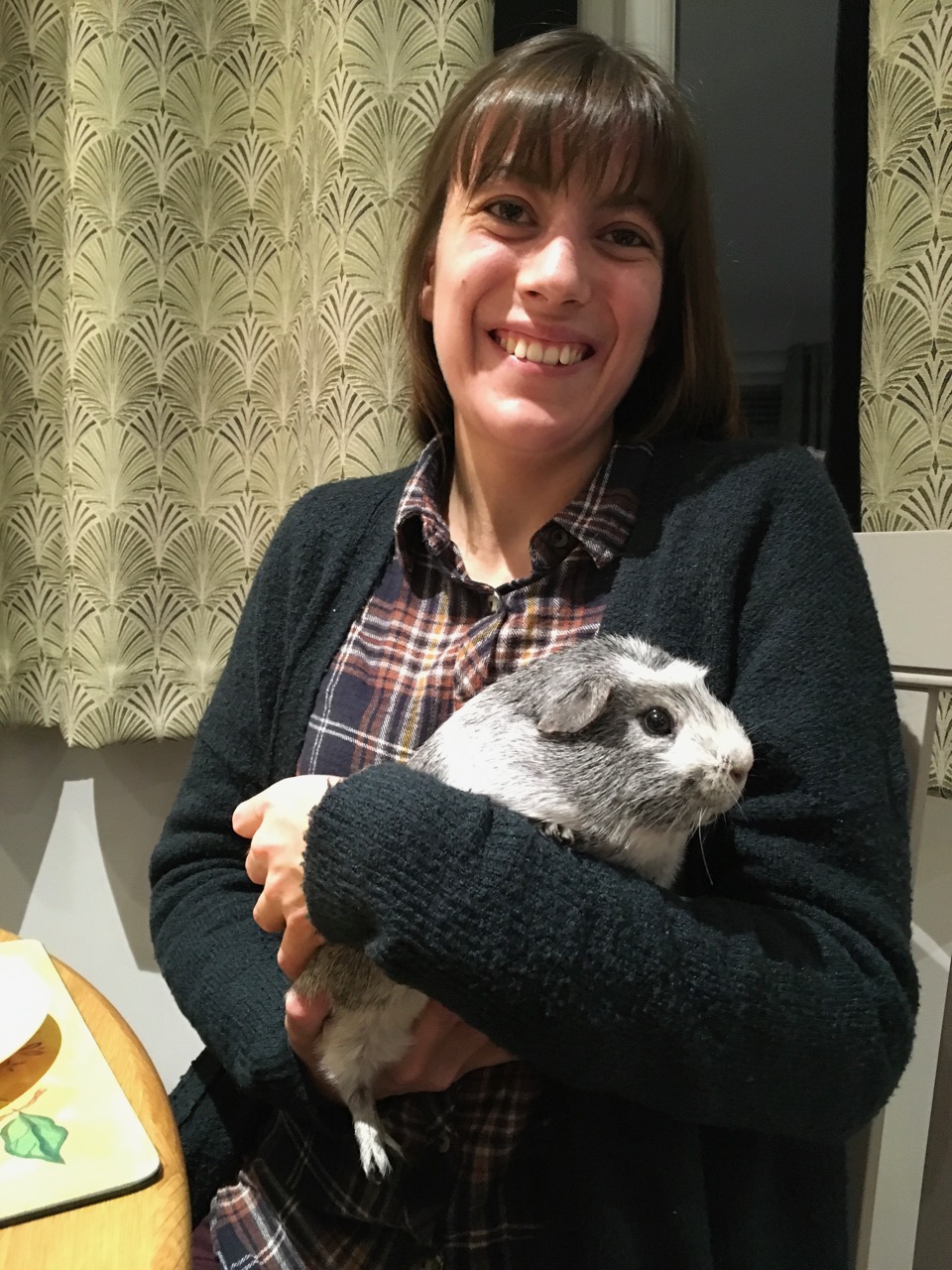
- when holding us, always support the whole body, and when moving, hold us top and bottom.


That’s it for today. Tomorrow is Quite Difficult!
love
Pippin xxx


Good stuff, Pippin!
LikeLike
As I often say, guinea pigs are nature’s perfect recyclers.
XXOO
LikeLike