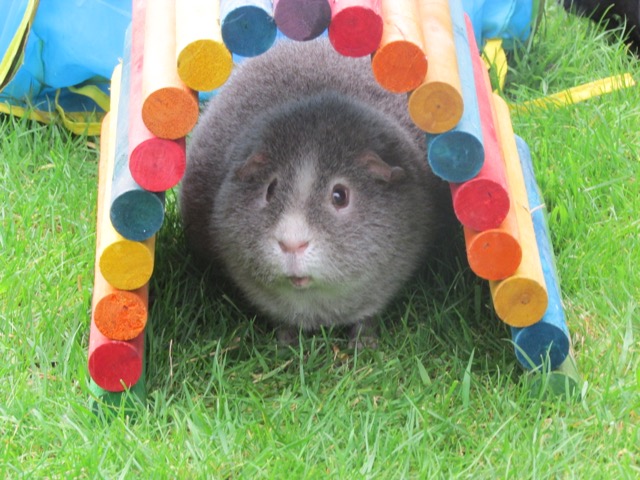
Hello, I’m Pippin, and I’m a guinea pig. Today I’m going to talk about Medicines, and why we might have to take them. And how you can give them to us.
We’re helping our Mummy, Jemima Pett, who is doing the A2Z this year by putting together all the posts we’ve done here on George’s Guinea Pig World, to make a book on Guinea Pig Care from A to Z. You can see her posts here: jemimapett.com/blog/. We’re filling in the gaps this month.

Medicines
Prescription Medicines from Veterinarians:
- Metacam, also known as Meloxicam and other similar names. This is an analgaesic (painkiller). Over the years after increased research, the dose for guinea pigs is now much higher than when George used to have it. He had 0.3 ml for every kilogram weight; now the dose is 1.3 mls per kilogram weight – of the stronger dog version, not the weaker cat and guinea pig version. It can be taken long-term or short-term, twice a day, depending on the issue.
- Baytril: the most common antibiotic in use, but there are several more which are thought to be more effective in different situation. Warning: Baytril tastes really bitter. It’s best to use some orange juice or similar to help disguise the taste, especially for a pig taking it for some time.
- Co-Trimoxidol: the antibiotic I’m taking at the moment for my bumblefoot. It’s supposed to taste like banana, but it doesnt, although it does smell like it. And I have to take most of the tube full. Well, it could be worse, I suppose.
- Frusol: is for the heart.
- Pimobendam: is also for the heart. I think one regulates valve function and the other helps muscle contraction.
- Thyronorm: is for thyroid problems. The box it comes in has a lot of health warnings for women. The bedding of pigs taking Thyronorm should be disposed of securely in burnt or landfilled waste disposal. Not to be composted.
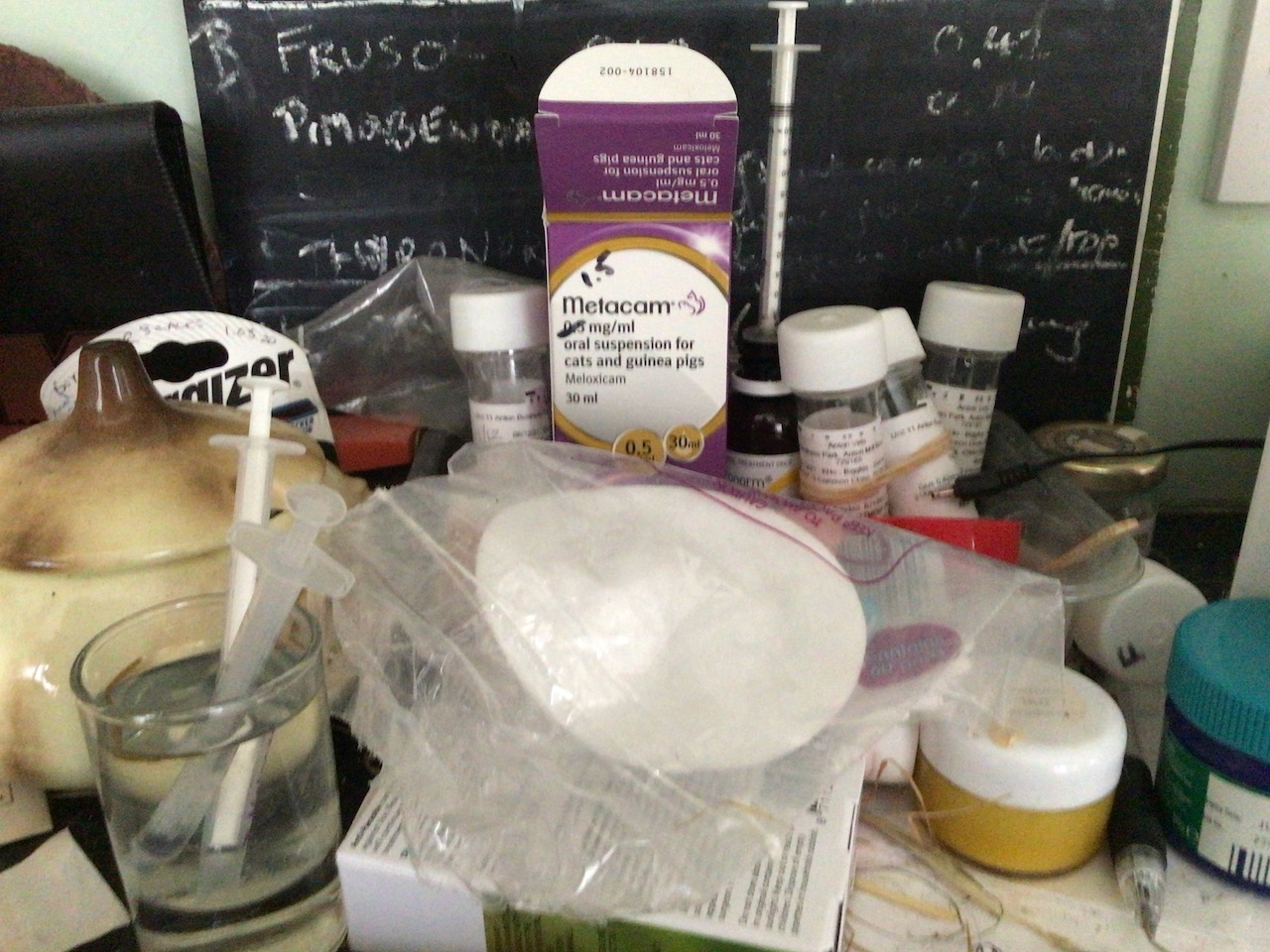
Ointments, creams and skin applications (some may need a prescription from your vet)
- Ivermectin: the active substance in skin preparations (spot-on treatments) for mites, mange mites, fleas and lice. There are an increasing number of brands, Xeno, Naqua and Beaphar are reliable.
- Panacur is a suitable treatment for worms in guinea pigs, but these are now relatively rare. It may be prescribed rather than over the counter.
- Daktarin and Canestan are controlled fungal treatment for human conditions such as athletes’ foot and ringworm. They are also effective for guinea pig fungal problems but don’t mention that to your pharmacist as they are not licenced to supply animal treatments.
- F10 Germicidal Ointment: a useful cream for boars (and presumable sows) with mild infections including sore genitals
- Activon honey cream: a very useful manuka honey that helps wounds and incisions heal quickly and cleanly
- Tamodine: a milder equivalent of tincture of iodine, for sterilising wound areas.
- Otodine: a preparation for ear problems, administered as ear drops.
- The standard eye medication is also that used by humans.
- Gorgeous Guineas F&M cream: suitable for foot application for red or sore feet and to prevent bumblefoot. Also can be used on scabbed areas including mouths when chelitis (scabs on the lips caused by too much acid food) is a problem.
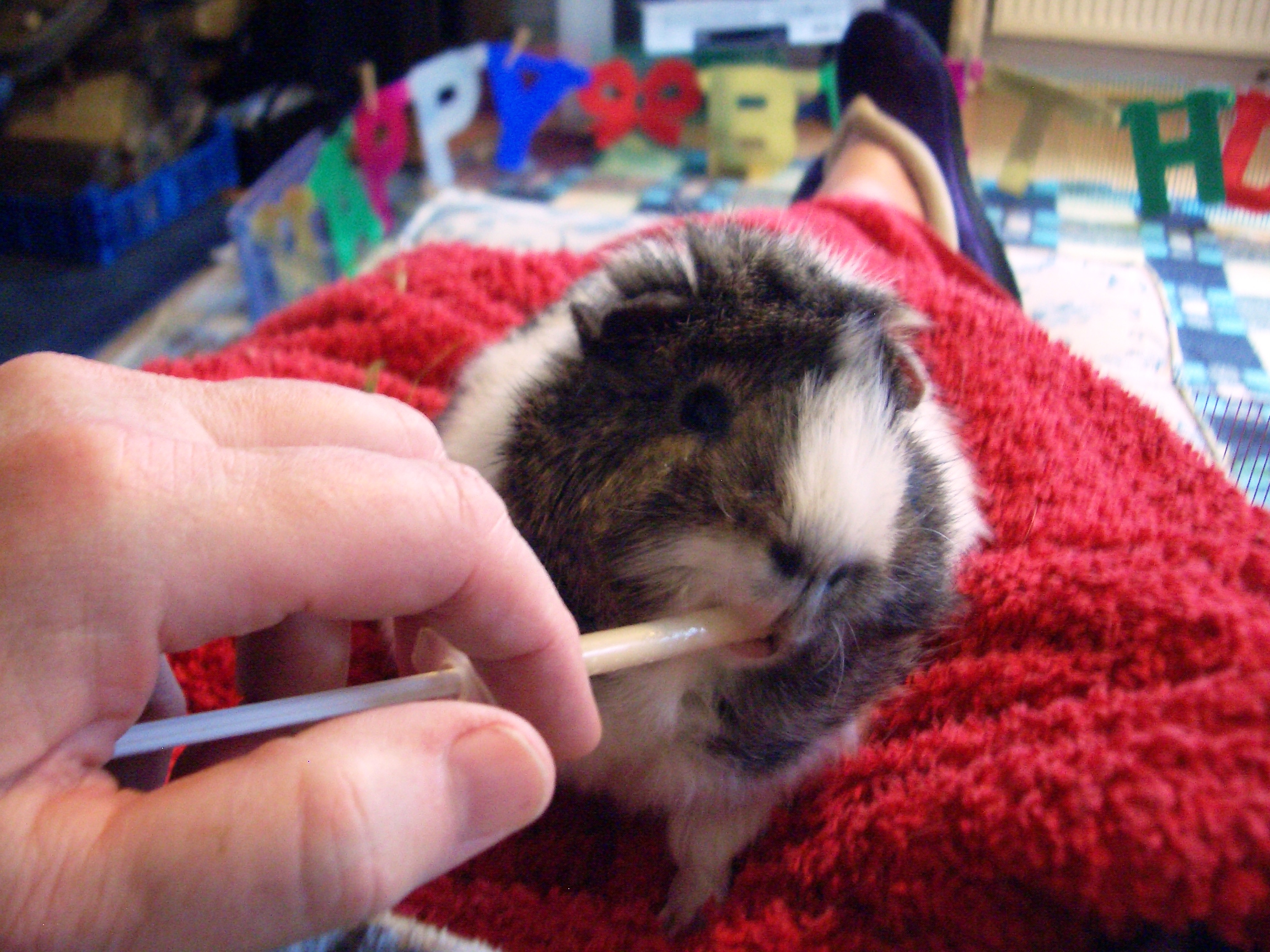
We’re also going to mention some supplements:
- Bio-lapis: a Pro-biotic to be mixed with cool water to use as a gut stabiliser alongside antibiotics
- Emeraid IC Herbivore: a very palatable supplemental feed for sick guinea pigs (and other small mammals). Intended for Intensive Care, there is also a version called Sustain which is more like a standard Recovery feed (which we refuse to eat). We love Emeraid, most of the time. Mummy says it is expensive, but worth it, especially as a supplement for elderly pigs.
- Vaseline: Vaseline petroleum jelly is probably well known world-wide for a wide variety of lubrication and soothing properties
- Vicks: the nasal and chest decongestant for humans is also useful for guinea pig breathing problems, and to help with a dab on the nose to disguise scents when boars are irritated by their neighbours.
- Potassium Citrate. This magic product is used in treating cystitis in humans, but is equally effective in guinea pigs at a rate of 0.05 ml per kg, diluted in roughly ten times water (0.5 water) twice a day. It helps reduce bladder stones and keep them away too. Get the liquid in a bottle from your pharmacist, not the tablets (those are for humans)
- Junior Soluble aspirin. In an emergency, such as fits or strokes, can help reduce the risk of blood clots when Metacam or its equivalent is not available.
When administering medicines you need to wash your hands before and after, and take any other precautions on the label. We are doing something on Syringe feeding later, I think.
First Aid kit
There are many lists of what you should have in a first aid kit, and Mummy says she’s never used any of them. In fact most of the products she’s seen listed have such a short shelf-life they’ll be old before you open them.
She does recommend keeping Activon honey cream, Vicks and Vaseline handy at all times, though. And cotton wool pads and cotton buds. But you probably have those in for your own use anyway.
So that’s it for today. Tomorrow I shall say Nothing about, until it comes.
love
Pippin


Pingback: M is for My Guinea Pig World #AtoZchallenge #booksky - Jemima Pett
So many medicines, Pippin! Your Mum takes good care to keep you healthy.
LikeLiked by 1 person
Yes, that’s a lot of medicine! Good think you don’t have to take them all at once .
LikeLiked by 1 person
at the moment i have to take an antibiotic called co-trimoxadol once a day, probiotic, potassium citrate all once a day, and Metacam twice a day. Mummy also makes me sit and eat my morning cucumber with my foot in a bowl of salt water. I’ve got a foot infection. We mentioned it in passing earlier, and said Mummy had never had a pig with it!
LikeLike
Thanks for this very useful list, Pippin! I will refer to it often, I’m sure.
XXOO
LikeLike
I think I got the heart meds mixed up. One’s for heart function and one is a diuretic to get the excess fluid out of the heart muscle.
Pippin
LikeLiked by 1 person
I read the one cream name wrong. “Guinness? 🍺 A stout cream to what, get you drunk?” 😅
Uncle J gotta read a little slower.
LikeLike