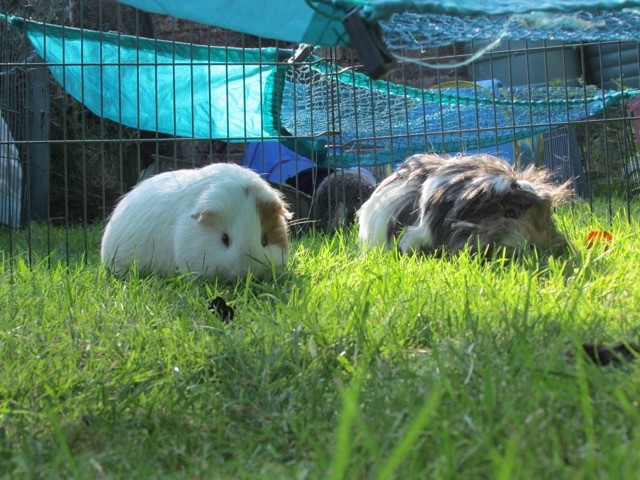
Hello, I’m Pippin, and I’m a guinea pig. Today I’m going to tell you about the Five Freedoms, which are your guidance for looking after any animal, including us. And also, Feet. I’m surprised my forebears haven’t already talked about feet.
We’re helping out our Mummy, Jemima Pett, who is doing the A2Z this year by putting together all the posts we’ve done here on George’s Guinea Pig World, to make a book on Guinea Pig Care from A to Z. You can see her posts here: jemimapett.com/blog/. We’re filling in the gaps this month.

The Five Freedoms come from an internationally agreed document from the 1960s. Most countries accept them, and may have laws on Animal Welfare too. For example, in Switzerland it is illegal to keep just one guinea pig on its own. You have to have them in pairs. This is a good thing, on the whole, because we are social animals and we should always be kept in pairs. But sometimes we fall out with our partner, and then we like to have our own space, but close to our former friend(s) so we can chat to them as and when. There is also a view in Germany that it is cruel to give guinea pigs baths. I’m not sure whether it’s illegal, but it is classed as cruelty to animals.
So if you are in the UK or US, or anywhere, really, you should check out these five Freedoms. Check out the laws on animal welfare in your home place. Generally speaking, laws are to protect us, based on these Five Freedoms. This sounds all very technical to me.

The place to go for advice in the UK is Guinea Pig Welfare UK. It is a charity organised and run by guinea pig experts, including the top vet John Chitty, and it has a website and newsletters with interesting information and guidance. And lots of good pictures.
The Five Freedoms that apply to any domestic or companion or working animal (this is copied from the US animal humane society):
- Freedom from hunger and thirst by ready access to fresh water and diet to maintain health and vigor. This must be specific to the animal.
- Freedom from discomfort by providing an appropriate environment including shelter and a comfortable resting area. This means you should provide soft bedding and an area with appropriate temperature, noise levels, and access to natural light. If an animal is outside, it must have shelter from the elements as well as appropriate food and water bowls that will not freeze or tip over.
- Freedom from pain, injury, or disease by prevention or rapid diagnosis and treatment. This includes vaccinating animals, monitoring animals, physical health, treating any injuries and providing appropriate medications.
- Freedom to express normal behavior by providing sufficient space, proper facilities, and company of the animal’s own kind. Animals need to be able to interact with — or avoid — others of their own kind as desired. They must be able to stretch every part of their body (from nose to tail), and run, jump, and play.
- Freedom from fear and distress by ensuring conditions and treatment which avoid mental suffering. The mental health of an animal is just as important as its physical health — as psychological stress can quickly transition into physical illness. These conditions can be achieved by preventing overcrowding and providing sufficient enrichment and safe hiding spaces.
Everything we are saying in this A to Z Guide is aimed at explaining further what you can do to help your animal experience these freedoms, even when it a secure area in your home.
Feet
We tend to hide our feet. Comes of being close to the ground. But Mummy likes to check our feet regularly. The main things she looks for is the length of our toenails, and the colour of our soles and heels.
Toenails need regular attention. I think Mummy is planning a detailed thing on trimming toenails under T. Our toenails grow, so they need trimming. If they get too long, they either curl under the foot and start digging in the soft pads there, which could be very painful, or they push the front of our feet up so we walk around on our heels.
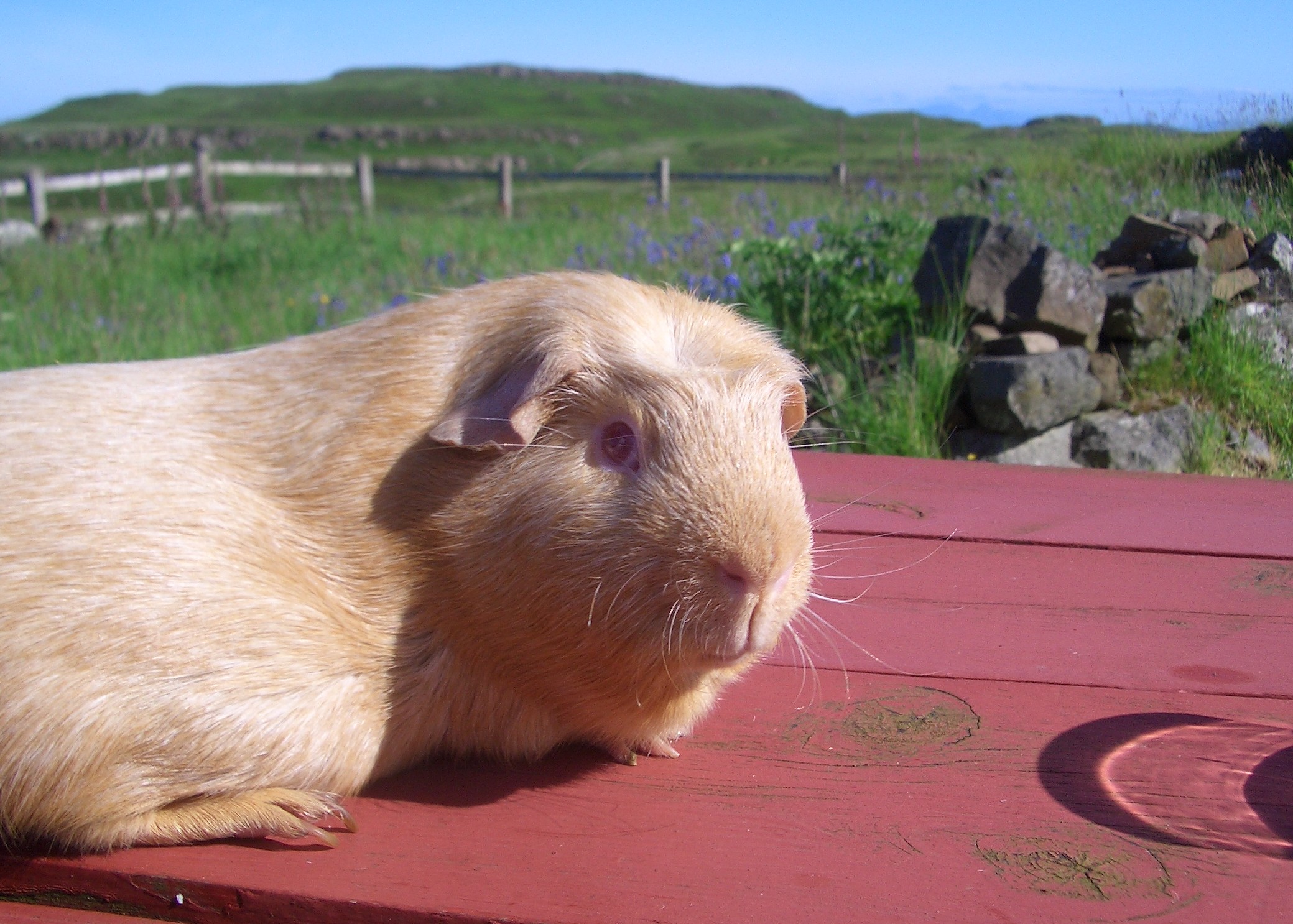
You might ask why they don’t wear down of their own accord. It’s about running around on rocks. Most of us don’t live in the Andes, and although our ancestors are a long way away from us, we still have feet like theirs. But we run around on softer surfaces. Even Mummy’s floorboards are not really hard.
So it comes down to damage to the underside of our feet. That’s what Mummy checks.
Red skin, especially on our heels, can lead to something called bumblefoot, which is a nasty infected growth that can lead to serious things if not caught early. Mummy puts Gorgeous Guineas foot cream (F&M) on Ronnie’s and my back feet to help keep them from getting too red. Reggie has black feet and he doesn’t tend to get sores on them, but she checks anyway.
Sometimes front feet get little skin growths called spurs on them, on or to the side of the front pad. These can be trimmed off carefully with nail scissors, but they are harmless, usually. Humphrey used to get them a lot.
We have very useful feet, please help us look after them.
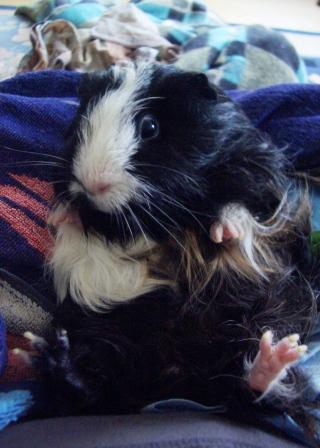
Oh and we have four toes on each front foot, the three toes on each back foot, which is how we can count to seven easily.
That’s it for today. Comeback for G tomorrow!
love
Pippin xxx
 George's Guinea Pig World